Scraper Nexus
Scraper Nexus is a cloud-native web intelligence platform that runs distributed, anti-detection scraping at scale — delivering structured datasets, competitive price monitoring, and market signals via API to data teams globally.
(Scroll down)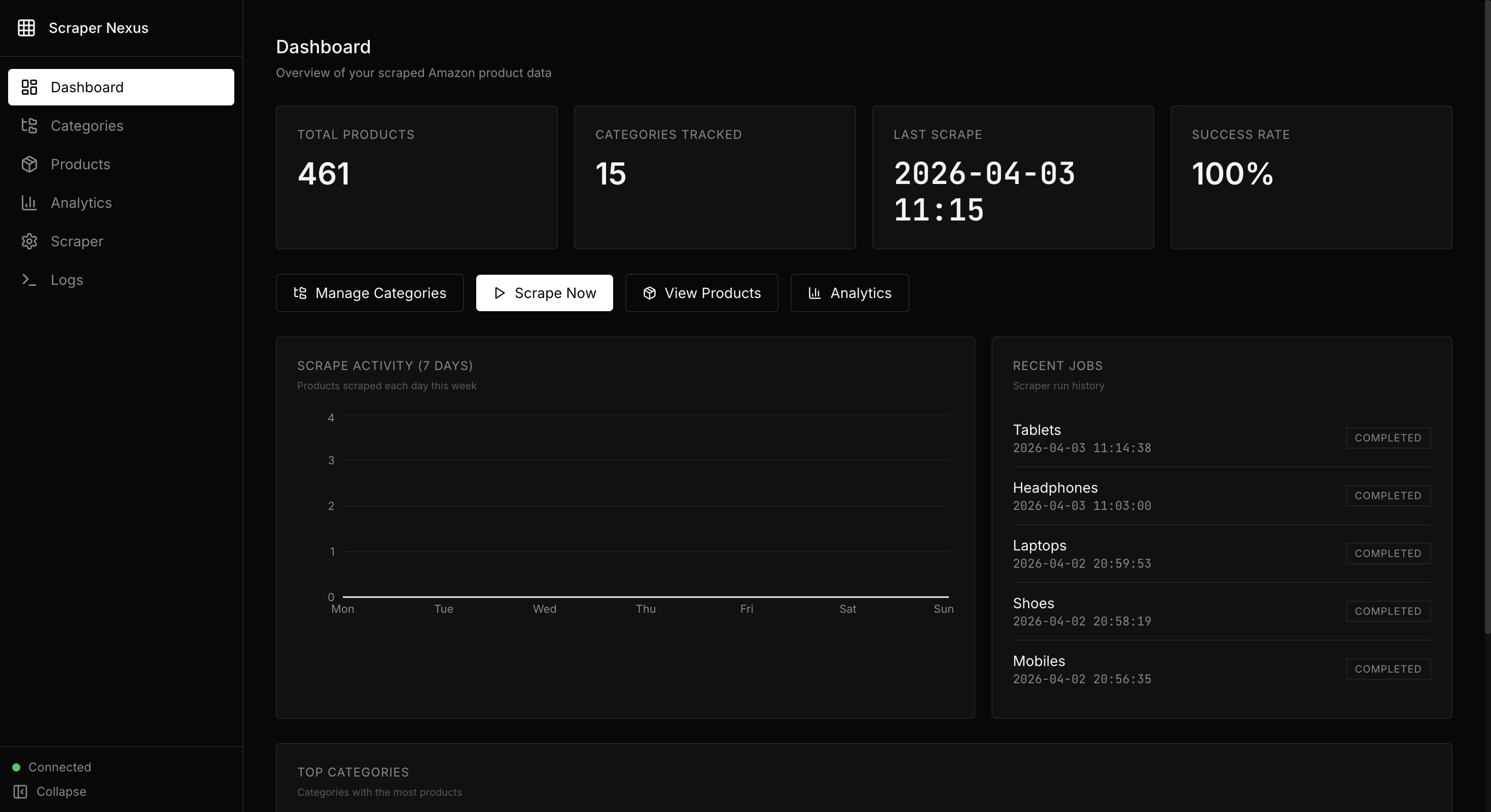
(Intro)
Data teams at e-commerce companies, hedge funds, and market research firms need reliable, large-scale web data — but building and maintaining scrapers in-house is expensive, brittle, and increasingly difficult against modern anti-bot systems.
Scraper Nexus abstracts all of that complexity: a fully managed scraping platform with rotating proxies, browser fingerprint spoofing, CAPTCHA bypass, and a clean structured-data API output.
I built the core scraping infrastructure: the distributed job scheduler, browser automation layer (Playwright), proxy rotation system, data normalisation pipeline, and the developer-facing API and dashboard.
Infrastructure Engineering Summary
Project overview
Scraper Nexus is a fully managed web intelligence platform that solves the hardest problems in large-scale data extraction: anti-bot detection, dynamic JavaScript rendering, distributed job management, and clean structured output.
Built for data teams at e-commerce platforms, hedge funds, market research firms, and competitive intelligence operations, Scraper Nexus turns the web into a reliable, queryable data source.
The engineering problem
Modern websites are aggressively hostile to automated data collection. Sophisticated bot detection systems (Cloudflare, Akamai, Datadome) use TLS fingerprinting, browser behaviour analysis, mouse movement heuristics, and IP reputation scoring to block scrapers.
Building scrapers that survive this environment at scale requires a full-stack approach: residential proxy rotation, realistic browser fingerprinting, human-like interaction simulation, and continuous adaptation as detection signatures evolve.
Infrastructure architecture
The job scheduling layer accepts scrape requests via REST API or webhook trigger, queues them in Redis, and distributes to a pool of Playwright worker nodes running in isolated Docker containers. Each worker is assigned a unique residential proxy, browser profile, and timezone to create a realistic digital fingerprint.
A fingerprint rotation system continuously cycles TLS signatures, browser user agents, canvas fingerprints, and WebGL parameters. JavaScript challenge solvers handle common CAPTCHA types (reCAPTCHA v2/v3, hCaptcha) via a combination of AI and third-party solving services.
Key capabilities
- Distributed Playwright browser workers with anti-fingerprinting.
- Residential proxy rotation with 40M+ IP pool.
- AI-powered CAPTCHA solving with <3s average solve time.
- JavaScript-rendered page support with smart wait strategies.
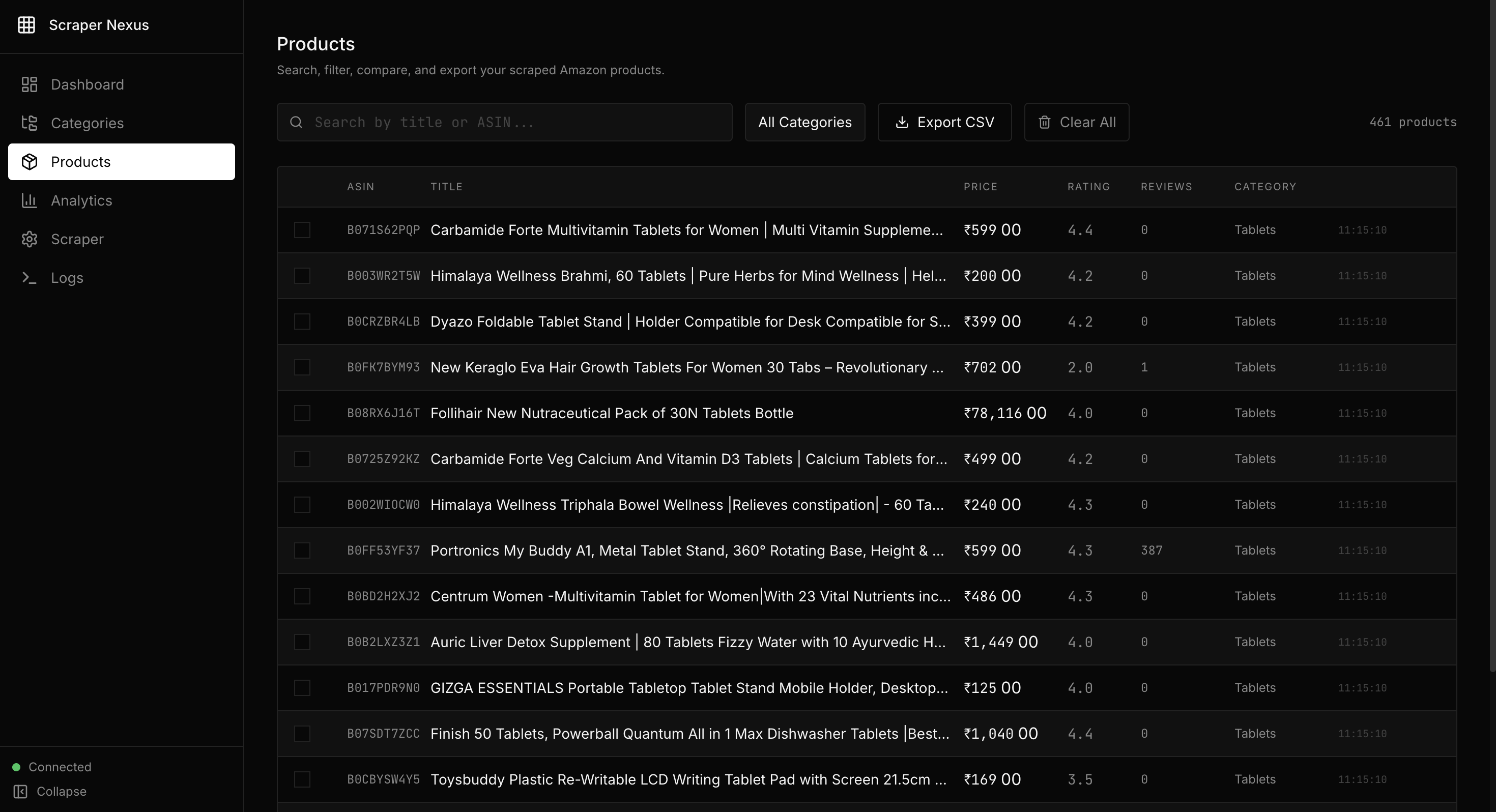
- Structured data extraction with schema-defined output formats.
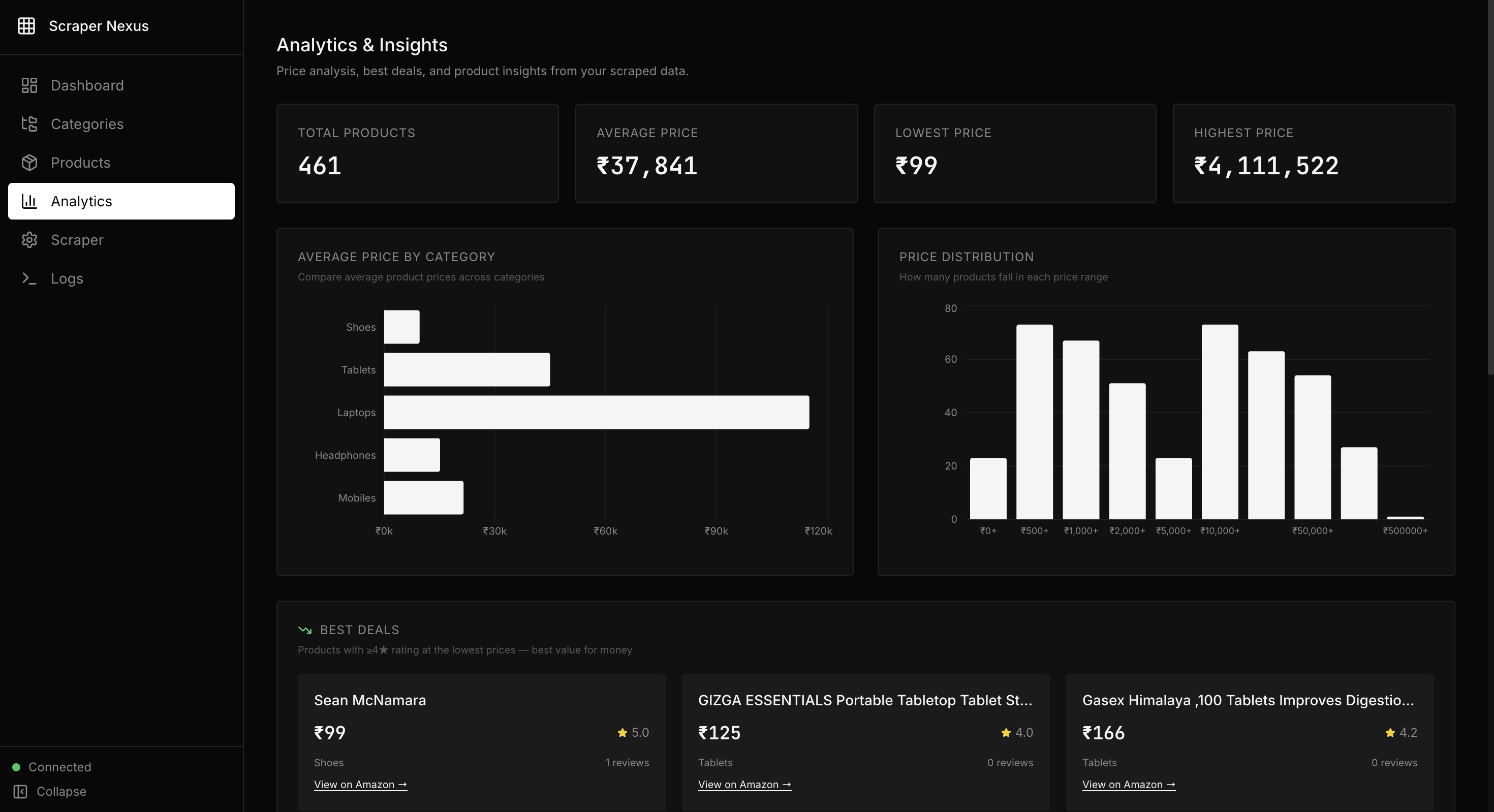
- Real-time price monitoring with change-event webhooks.
- S3-compatible data export and REST API output.
- 99.5% uptime SLA with automatic job retry and failover.
Outcomes
- 99.5% job completion rate across major anti-bot protected targets.
- Sub-3s CAPTCHA solve time average.
- Structured data API serving 10M+ rows monthly.
- 40M+ residential IP pool for detection evasion.